
How a halftime show became a culture war and why the outrage feels so tired
Puerto Rico is American territory. Spanish predates English in the Americas. The NFL brands itself as global entertainment.
None of this mattered.
When Bad Bunny got announced for the Super Bowl halftime show, the complaints rolled in: He doesn't sing in English. He's foreign. This isn't American.
Facts are such inconvenient things when you're building a narrative.
My Spanish is rusty. Watched it anyway. People were moving. Energy landed. It worked.
And there's the problem. When the thing they told you to hate turns out to be fun, the whole machinery starts making weird noises.
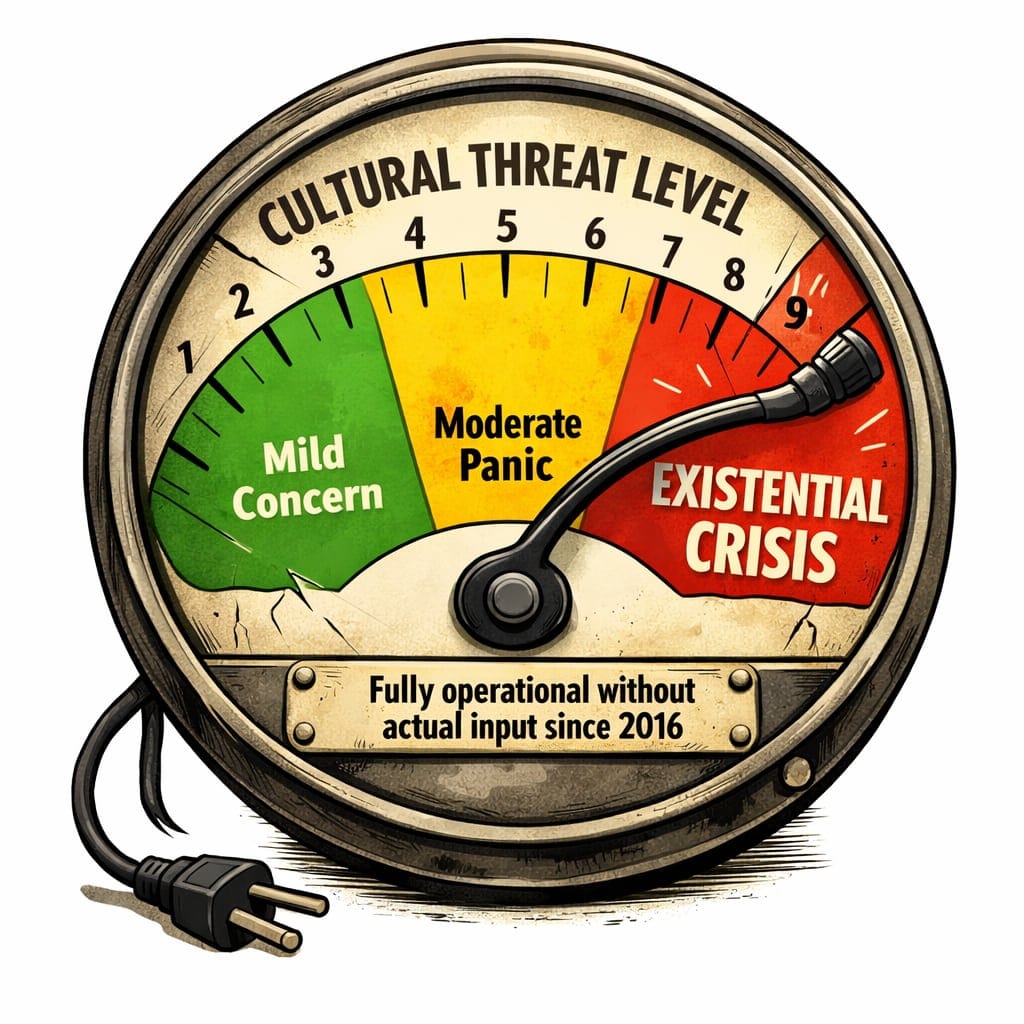
The Outrage Came Before the Music
Timing was the tell.
Much of the fury arrived before the performance aired, before a single note. Anyone claiming they'd experienced the thing they were so upset about was lying, and not even creatively.
Outrage culture doesn't wait for experience. It pre-frames it. Inoculates people against enjoyment before they can accidentally have some. Because once you watch something and think, "Huh, that was actually kind of great," the performance deflates.
Not the halftime show. The outrage itself.
From "Crazy Artists" to "Un-American Artists"
Authoritarian systems used to call artists crazy. Simple logic: They create beauty, therefore they're irrational. Irrational people can be safely ignored.
Doesn't work anymore.
Artists today aren't marginal weirdos in cafés. They're platforms with audiences that dwarf most politicians. Calling them "crazy" just sounds tired. Weak, even.
So the strategy evolved. The attack shifted from psychological to moral, individual to tribal. Un-American. Divisive. Elitist. Hates this country.
Notice the move. Quality of the art? Irrelevant. This is about ownership. Who gets to represent "us"? Who gets the microphone at the nation's biggest cultural event. Who defines normal.
Bad Bunny didn't break any rules. He just didn't ask permission first.
Why "He Doesn't Sing in English" Is the Tell
Let's translate the complaint.
It's not "I don't enjoy this music."
It's "This wasn't made specifically for me."
Much harder emotion to process.
For a long time, American mass culture operated on an unspoken default: English first, Anglo framing, familiar faces in the foreground. That default is eroding. Not conspiracy — demographics shifted, platforms democratized distribution, global culture stopped asking for permission.
The halftime show didn't take anything away. It expanded the room.
Expansion feels like a loss when you're used to being the center. When the camera finally pans out, some people experience it as the camera moving away from them. Geography doesn't even matter. This same resentment plays out in living rooms from Tampa to Toronto, Manchester to Melbourne. Anywhere the old default is meeting its expiration date.
Joy Is Kryptonite
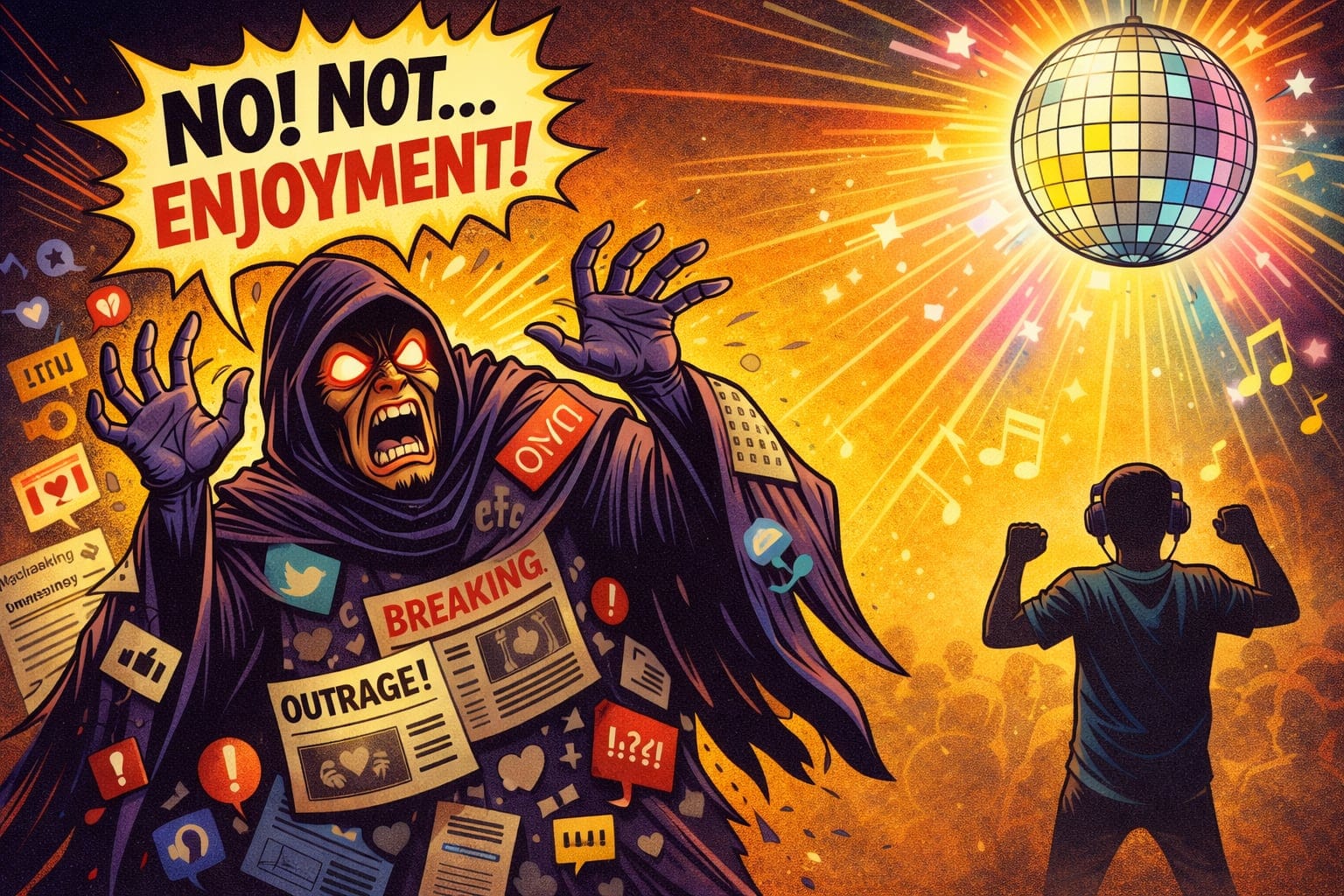
Here's what outrage politics can't stand: unbothered enjoyment.
Anger needs constant engagement. Retweets, pile-ons, perpetual enemies, the next scandal queued before the current one cools. Joy doesn't demand any of that. Just sits there, annoyingly content with itself.
A performance that's confident, playful, unapologetic, genuinely fun? Quietly communicates something dangerous.
You don't have to be mad to belong here.
Not radical. Relaxing. Which makes it subversive in ways radicalism never could be.
Hard to keep people in a constant state of grievance when they're dancing on their couch.
Why It All Feels So Tired
The outrage industrial complex needs three things: novelty, clarity, belief.
Each scandal feels fresh. There's an obvious villain. Outrage will lead to actual change.
We're losing all three.
Complaints sound recycled. Villains keep rotating. Everyday life stubbornly refuses to improve. So, the anger compensates by getting louder, which only makes it thinner. More performative. Less persuasive.
Eye rolls instead of pitchforks. That's how you know something's shifting.
Bad Bunny Didn't Start a Culture War
Never really about a halftime show. About anxiety over who gets to feel at home in the USA. Who gets to take up space without justifying it first.
The funny part? The performance didn't argue. Didn't lecture or scold or defend. Just existed. Confidently. Joyfully. Loud enough to be heard.
Why the backlash felt so frantic, not because the show failed, but because it worked.
The Quiet Ending
The most subversive thing that happened wasn't political at all.
Millions watched. Some loved it. Some shrugged. Some danced. Then they moved on with their lives.
No collapse. No moral decay. No civilization-ending consequences. Just entertainment on a Sunday night.
That quiet "yeah, that was fun" might be the most dangerous sentence the outrage machine has heard in years.
Outrage can survive criticism. Feeds on opposition. What it can't survive is indifference. Can't metabolize people having a good time and then simply moving on.
The culture war needs you to stay mad.
The halftime show suggested you could just...enjoy things.
No wonder they were so upset.

